1. Basic Concept

Foam fire extinguishing systems are systems in which foam concentrate is mixed with water at the required proportion, conveyed and aerated to produce foam, and then applied onto the surface of burning materials. By isolating air, cooling the fuel, and suppressing the evaporation of flammable liquids, the systems achieve fire extinguishment or fire control. These systems are mainly applicable to Class A, B, and C liquid fires as defined in the Chinese classification system, as well as other occupancies and hazards suitable for protection by foam fire extinguishing systems.

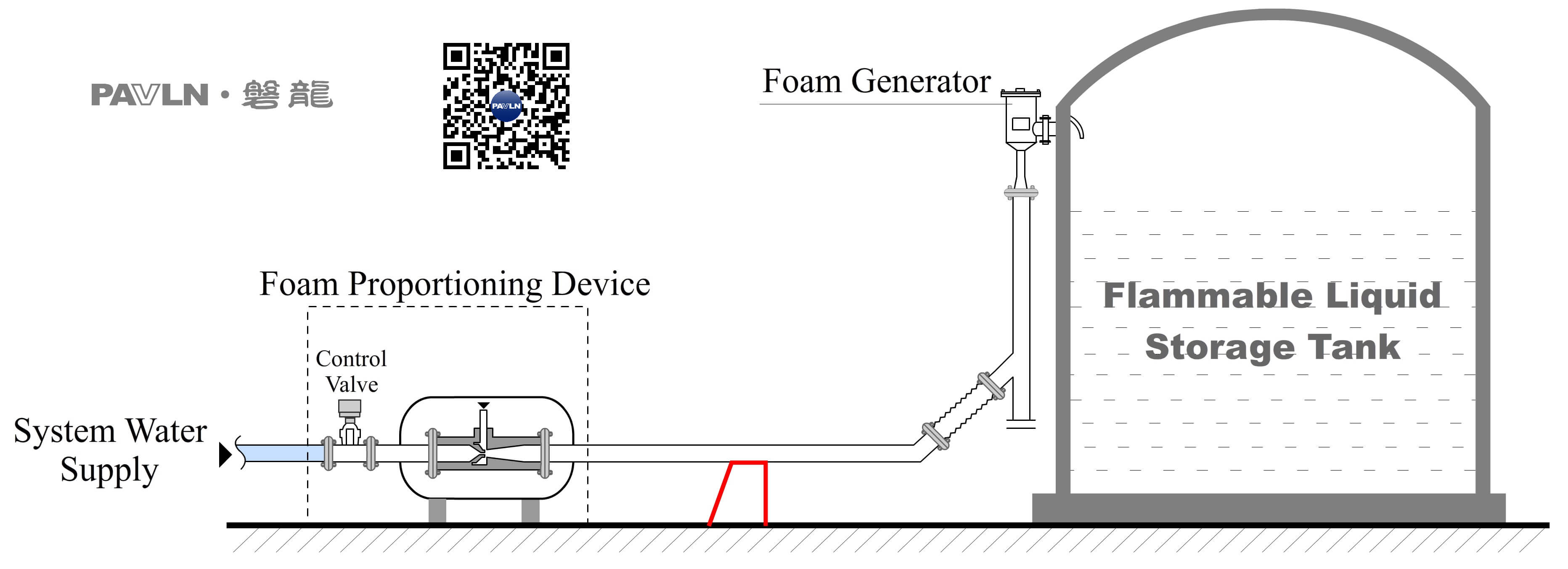
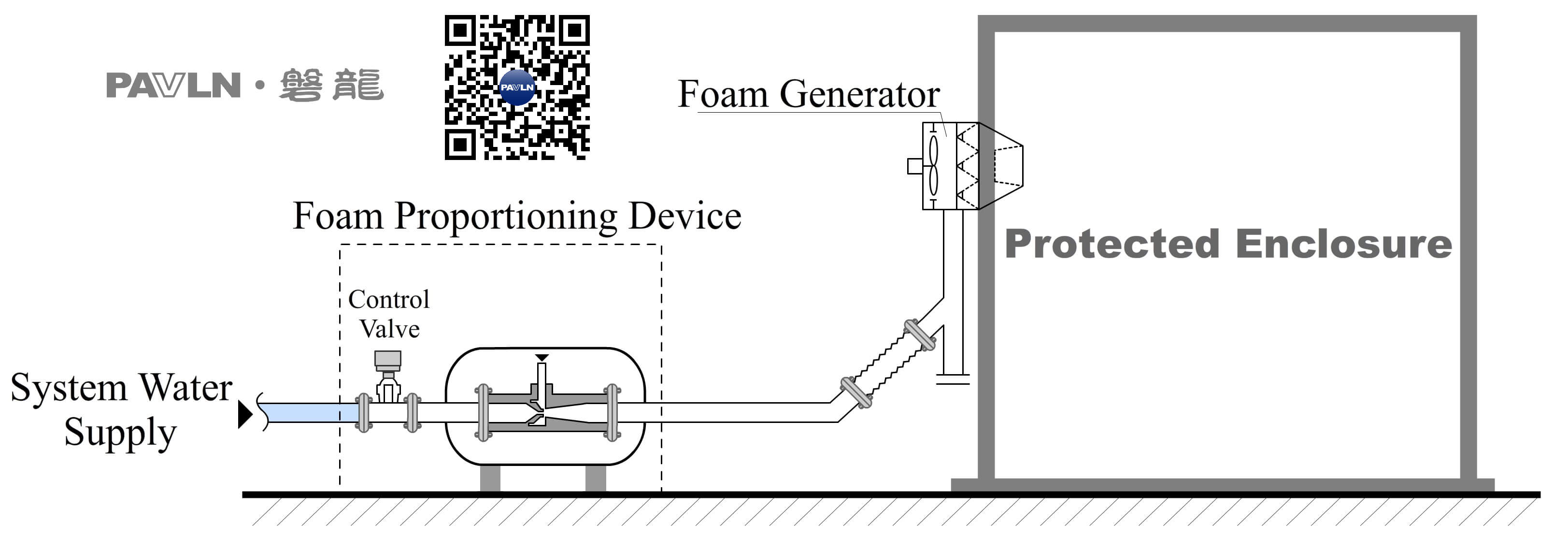
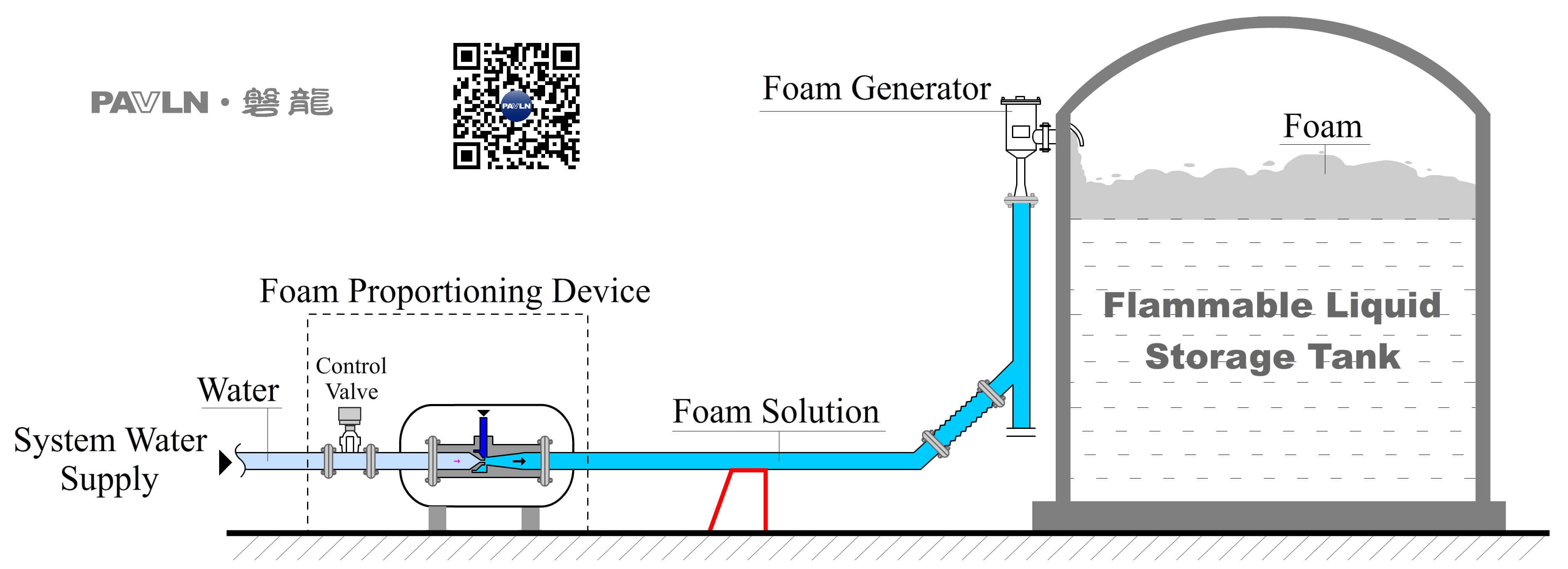
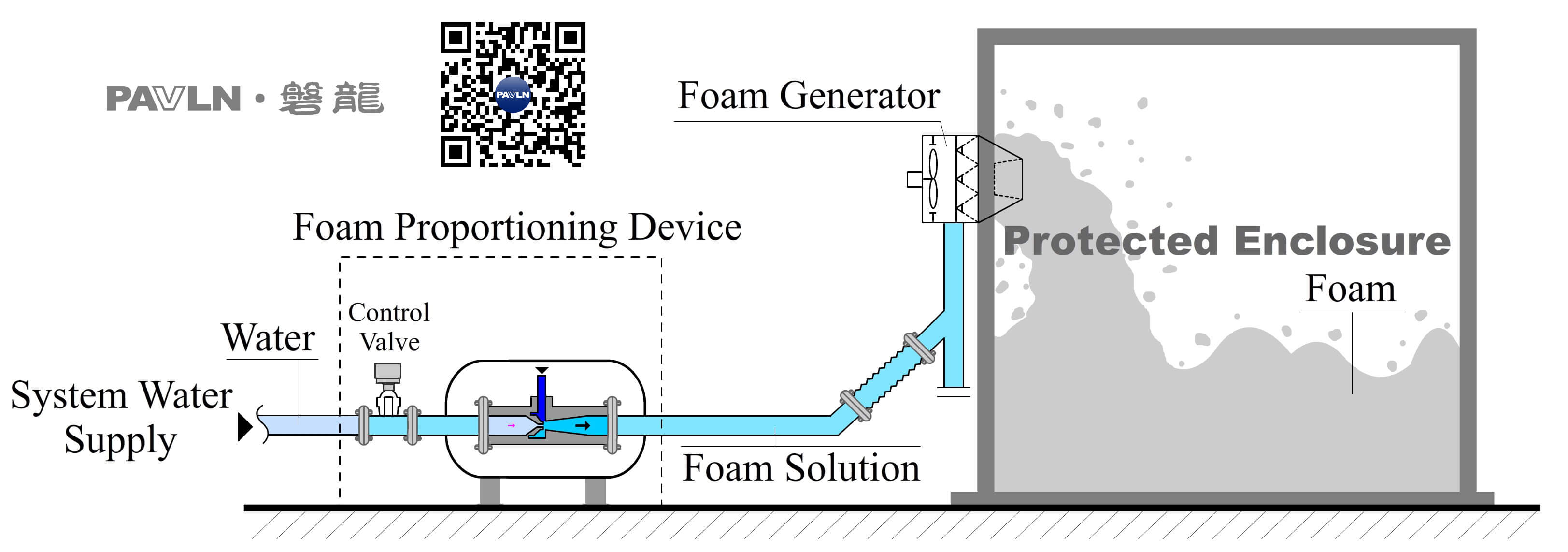
[Figure 1] and [Figure 2] are schematic diagrams of a low-expansion foam fire extinguishing system and a high-expansion foam fire extinguishing system, respectively. The systems mainly consist of a system water supply, foam concentrate storage devices, foam proportioning devices, conveying piping, control valves, and foam generators.

[Figure 3] Schematic diagram of a low-expansion foam fire extinguishing system. The foam proportioning device mixes foam concentrate with water at the required proportion to form foam solution, which is conveyed through piping to a low-expansion foam generator, producing low-expansion foam to cover the surface of flammable liquid.

[Figure 4] Schematic diagram of a high-expansion foam fire extinguishing system. The foam proportioning device mixes foam concentrate with water at the required proportion to form foam solution, which is conveyed through piping to a high-expansion foam generator, producing high-expansion foam to fill the protected enclosure.

2. Main Components

Foam fire extinguishing systems generally consist of a system water supply, foam concentrate storage devices, foam proportioning devices, conveying piping, control valves, and foam discharge devices. The main components are described below.

2.1 System Water Supply

The system water supply provides the water flow, pressure, and water quantity required for system operation. It may be supplied from a fire water supply network, a municipal water supply network, or water supply facilities such as fire water tanks and fire pumps.

2.2 Foam Proportioning Device

A foam proportioning device is used to mix foam concentrate with water at the specified proportion to form foam solution. Various types of foam proportioning devices are available, including pressure proportioning devices, pump-in proportioning devices, and balanced pressure proportioning devices.

2.3 Foam Discharge Device

Foam discharge devices are used to aerate the foam solution and discharge it onto the surface of the protected object to extinguish or control fire. The specific type of discharge device depends on the system type, for example:

In high-, medium-, and low-expansion foam fire extinguishing systems, high-, medium-, and low-expansion foam generators are generally used;

In foam-water sprinkler systems, sprinklers, water spray nozzles, or foam sprinklers are generally used;

In foam-water spray systems, water spray nozzles are generally used;

In systems equipped with foam monitors or foam hose nozzles, foam monitors, foam nozzles, or similar discharge devices are generally used;

In mobile foam fire extinguishing systems, foam nozzles, foam pick-up tubes, or similar devices are generally used.

3. Typical Systems Commonly Used in Engineering Practice

In engineering practice, the most commonly used foam fire extinguishing systems mainly include the following types:

3.1 Low-Expansion Foam Fire Extinguishing Systems for Tank Farms

Low-expansion foam fire extinguishing systems for tank farms use low-expansion foam to cover the liquid surface of storage tanks, seal areas, bunded areas, or spilled liquid surfaces for fire extinguishment and fire control. These systems are mainly applicable to crude oil, refined oil products, and other storage tank areas containing flammable liquids of Class A, B, and C under the Chinese classification system, as well as related loading, unloading, and spill areas.

3.2 Foam-Water Sprinkler Systems

Foam-water sprinkler systems combine a foam proportioning device with a water sprinkler system so that foam solution is discharged through sprinklers, providing the functions of foam extinguishment, water cooling, and fire control. These systems are commonly used in aircraft hangars, warehouses, vehicle garages, and certain liquid fire hazard occupancies.

Foam-water sprinkler systems mainly include foam-water deluge systems and closed-head foam-water sprinkler systems. Foam-water deluge systems generally use water spray nozzles or foam sprinklers and, after the control valve is opened by the fire detection system, supply foam solution simultaneously to all discharge devices. Closed-head foam-water sprinkler systems generally use closed sprinklers and discharge foam solution after the sprinkler operates.

3.3 Foam-Water Spray Systems

Foam-water spray systems discharge foam solution through water spray nozzles, combining the benefits of foam extinguishment and spray cooling. They are mainly used for the protection of specific equipment, process units, or localized hazard areas.

3.4 High-Expansion Foam Filling Systems

High-expansion foam filling systems use high-expansion foam generators to deliver high-expansion foam into enclosed or semi-enclosed protected spaces, so that the foam fills the protected enclosure or covers the fire area within a specified period for fire extinguishment or fire control. These systems are mainly applicable to warehouses, underground spaces, ship compartments, aircraft hangars, and other large or specially enclosed spaces.

3.5 Foam Monitor Systems

Foam monitor systems use foam monitors to discharge foam, featuring long throw distance, large flow capacity, and wide coverage. They are suitable for fire protection in tank farms, loading and unloading areas, and large spill fire areas.

3.6 Foam Nozzle Systems

Foam nozzle systems use foam hose nozzles to discharge foam for extinguishment, fire control, or auxiliary foam blanket application on localized liquid fires. These systems have good mobility and are commonly used in loading facilities, pump areas, loading racks, and other auxiliary protection areas.

3.7 Integrated Foam Station (Foam Hose Reel Station / Foam Hydrant Cabinet)

Integrated foam stations are compact, self-contained foam firefighting units typically consisting of a foam concentrate storage assembly, a proportioning device, a hose reel, fire hose, a foam hose stream nozzle or branch pipe, valves, and associated pre-piped components. Once connected to a pressurized water supply, foam concentrate is mixed with water at the required proportion to produce foam solution, which is then discharged through the hose and nozzle for localized flammable-liquid fire suppression, supplementary fire suppression, or foam blanket application. Similar equipment is widely used in international markets as foam stations, foam hose reel stations, or other self-contained foam hose units. In practical applications, a foam hydrant cabinet is one of the common enclosed configurations of an integrated foam station.


4. Compressed Air Foam Systems

Compressed Air Foam Systems (CAFS) are foam fire extinguishing systems in which foam solution is mixed with compressed air within the system so that compressed air foam is formed before discharge, and is then conveyed through piping and discharged for fire extinguishment or fire control.

In conventional foam fire extinguishing systems, foam solution is usually mixed with air at the end of the system through a foam-generating device to form foam. In compressed air foam systems, however, compressed air is injected into the foam solution so that foam is formed before it reaches the discharge device. The foam produced by such systems generally has finer bubbles, better uniformity, higher stability, stronger adhesion, and can be conveyed over longer distances.

In summary, compressed air foam systems still fall within the category of foam fire extinguishing systems, but their foam generation method differs from that of conventional systems that rely on end-of-line foam-generating devices.

5. Typical Applications

Typical applications of foam fire extinguishing systems mainly include:

Petrochemical process areas
Flammable liquid storage tank area
Oil loading and unloading facilities
Aircraft hangars
Ships and port facilities
Underground garages
Warehouses and industrial plants
Other occupancies with flammable liquid fire hazards